
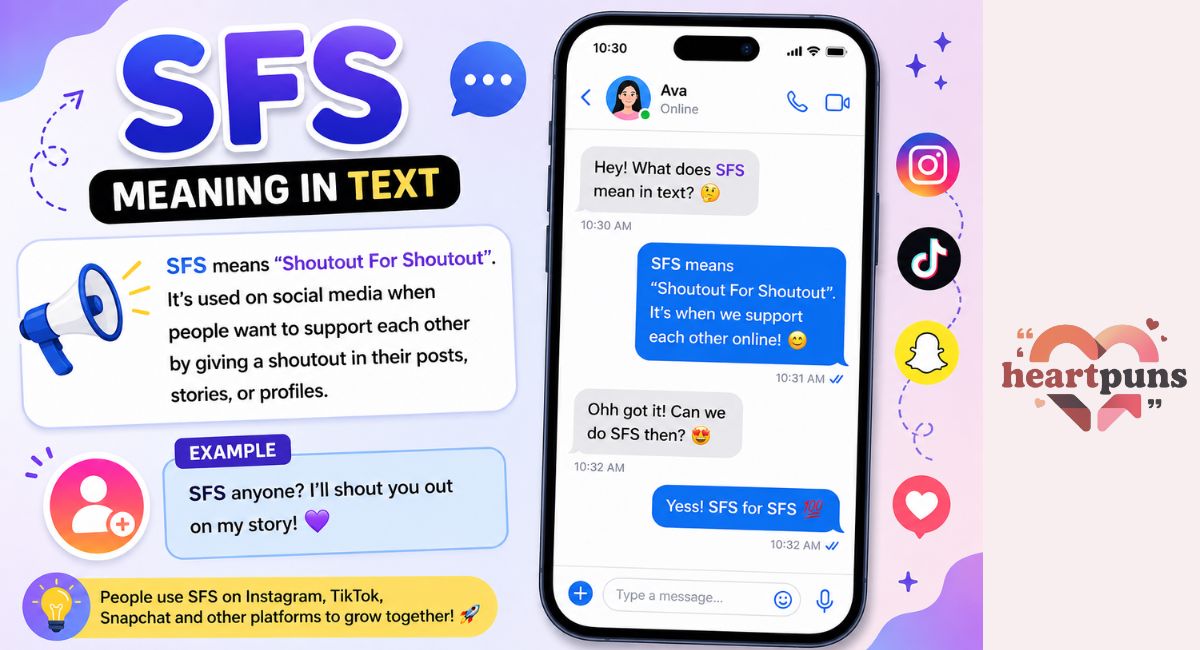

Ever opened Instagram, spotted someone typing “SFS?”, and thought, “Did my keyboard miss a few letters?” 😄 You’re definitely not the only one! Internet slang has a funny way of turning three tiny letters into a big mystery. If you’ve been wondering about the SFS meaning in text, you’re in the right place. This popular text slang appears across social media every day, especially among content creators and active users who enjoy connecting with others.
In this guide, we’ll break down the SFS meaning in text in the simplest way possible. You’ll discover where it’s used, why people love it, and how Shoutout for Shoutout helps with social media engagement. By the end, you’ll recognize this common social media slang with confidence and never have to guess what SFS means again.
What Is SFS? 🤔
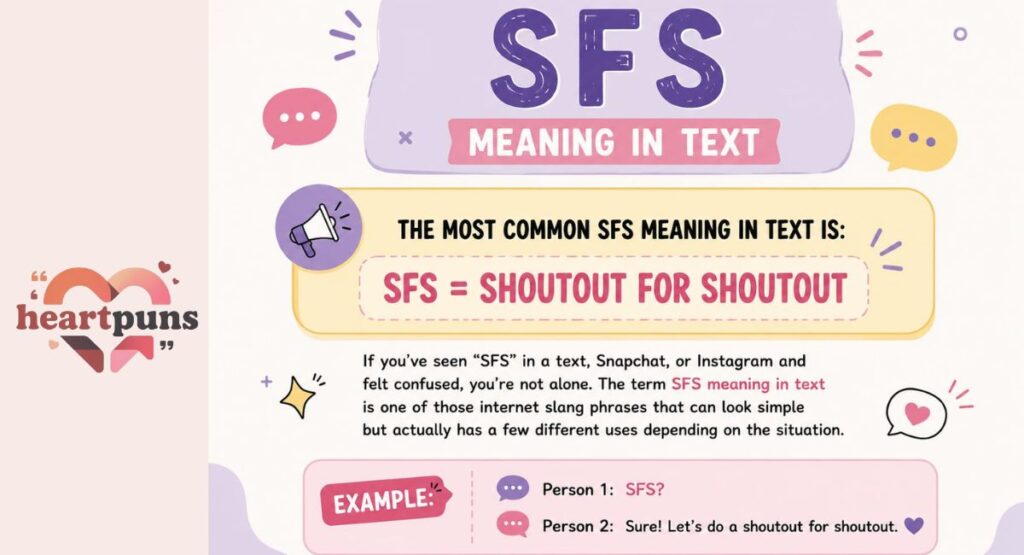
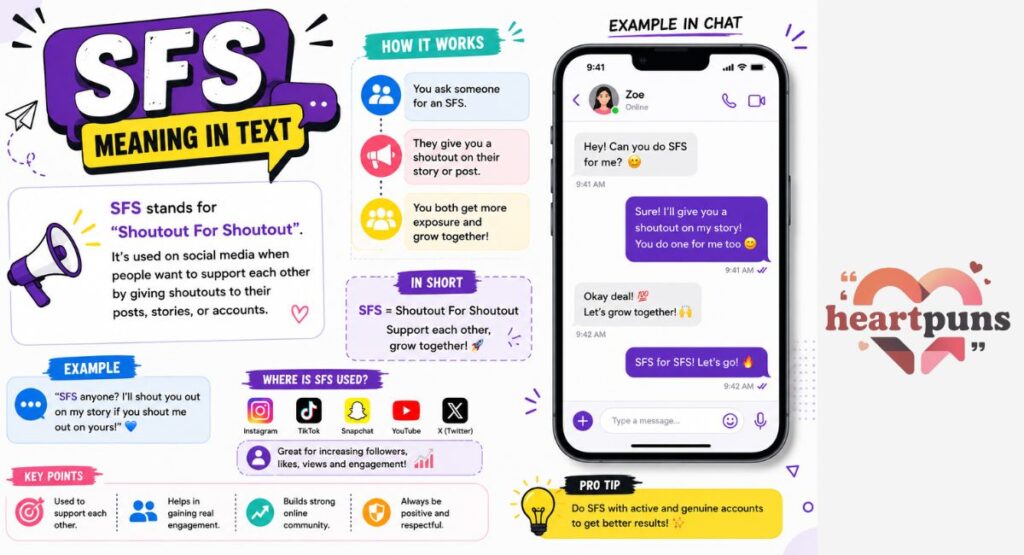
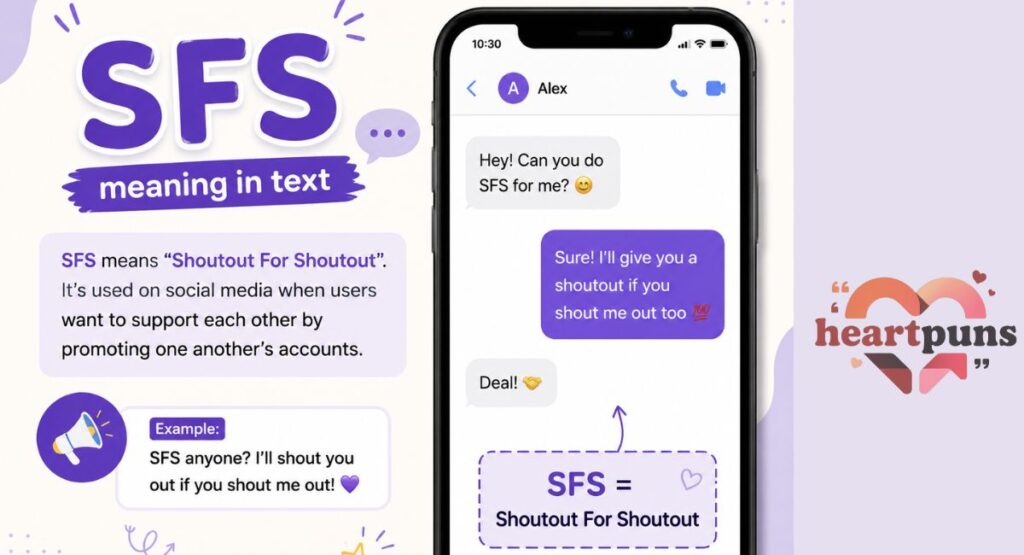
The most common SFS meaning in text is “Shoutout for Shoutout.” It’s a popular social media slang term that people use when they want to exchange promotions. In simple words, one person shares another person’s account, and that person returns the favor by sharing theirs.
Instead of paying for advertising, many content creators, influencers, and even small business accounts use SFS as a friendly way to reach more people. This type of mutual promotion helps increase online visibility, encourages audience engagement, and introduces new followers to different profiles.
Here is a simple example:
Alex: “Anyone interested in an SFS today? 📸”
Mia: “Sure! Send me your profile, and I’ll share it in my story.”
In this conversation, both users agree to promote each other, making it a classic example of Shoutout for Shoutout.
You may also come across SFS in texting, but it appears much more often on social media than in regular text messages. That’s why many people associate SFS meaning with platforms like Instagram, Snapchat, and TikTok rather than everyday chats.
SFS on Instagram 📸
If you’ve ever browsed Instagram Stories, you’ve probably seen someone post “SFS?” or “Doing SFS today!” Don’t worry—it’s not a secret code. On Instagram, the SFS meaning in text almost always stands for Shoutout for Shoutout.
The idea is simple. Two users agree to feature each other’s profiles, stories, or posts. This profile promotion helps both accounts reach a wider audience without spending money on ads. It’s a popular engagement strategy used by influencers, creators, and even small brands looking to grow naturally.
For many people, SFS on Instagram is a fun way to discover new creators, build friendships, and support others in the same niche. Instead of competing, users work together through creator collaboration and mutual shoutouts.
How SFS Works on Instagram
Here’s a typical example:
Emma: “Anyone up for an SFS this afternoon? 📱”
Liam: “I’m in! I’ll share your page in my story if you share mine.”
Both users post each other’s profiles on their Instagram Stories, giving their followers a chance to discover someone new. This type of cross promotion often increases account exposure and encourages follower engagement.
Why Instagram Users Love SFS
Many people use SFS meaning in text on Instagram because it offers several benefits:
- 📸 Introduces your profile to new audiences
- 🚀 Helps improve online visibility
- 🤝 Encourages social media collaboration
- ❤️ Builds a supportive creator community
- 📢 Promotes authentic audience engagement
Although SFS can help you gain attention, it’s most effective when you collaborate with relevant accounts that share similar interests. Quality connections usually bring better results than posting endless shoutout requests.
SFS on Snapchat 👻
The SFS meaning in text is also common on Snapchat, but the way people use it can be a little different. While many users still mean Shoutout for Shoutout, others may use SFS to ask for a quick exchange of story mentions or even Snap for Snap, depending on the conversation.
That’s why context matters. Looking at the message or story usually tells you exactly what the sender means.
How People Use SFS on Snapchat
On Snapchat, SFS often appears in:
- 👻 Snapchat Stories
- 💬 Private chats
- 📱 Group conversations
- 📸 Story mentions between friends
Here are a few everyday examples:
Noah: “SFS tonight? 👻”
Sophia: “Sure! I’ll add your story if you add mine.”
Another example:
Chris: “Doing SFS with active users only.”
Ava: “Count me in! I’ll post your Snap.”
In both conversations, users are helping each other reach more people through story sharing and social media exposure.
Why Snapchat Users Choose SFS
Many Snapchat users enjoy SFS because it’s quick, simple, and social. Instead of focusing only on follower numbers, it helps people:
- 🌟 Gain brand visibility
- 🤝 Build online friendships
- 📈 Increase social media engagement
- 📢 Share profiles with active audiences
- 💬 Stay involved in online communication
SFS in DMs 💬
While many people see SFS meaning in text on public stories, it’s also common in Direct Messages (DMs). Instead of posting a public request, users often send a private message asking if someone would like to exchange shoutouts.
This approach feels more personal and gives both people a chance to discuss the details before sharing each other’s profiles. Many content creators, influencers, and small business accounts prefer using DMs because it’s a simple way to start a creator collaboration without announcing it publicly.
Common DM Conversations
Here are a few examples of how SFS appears in private chats.
Olivia: “Hi! Would you like to do an SFS today? 😊”
Daniel: “Absolutely! Send me your favorite post, and I’ll share it.”
Emily: “Your content is amazing. Interested in an SFS?”
Ryan: “Thanks! I’d love to. I’ll post your profile this evening.”
Sarah: “Looking for active creators for SFS.”
Jacob: “I’m interested. Let’s support each other!”
These conversations show how SFS in texting is friendly, simple, and focused on mutual promotion rather than formal communication.
Why People Prefer DMs
Many users choose Direct Messages (DMs) because they can:
- 💬 Discuss the collaboration privately
- 🤝 Build genuine creator relationships
- 📢 Share profiles at the best time
- 🌟 Increase account exposure
- 🚀 Encourage authentic engagement
A polite message often receives a better response than sending the same request to dozens of strangers
Why People Use SFS 🚀
Once you understand the SFS meaning in text, it’s easy to see why this abbreviation has become so popular across different social media platforms.
People don’t use SFS just because it’s trendy. They use it because it helps them connect with others while growing their online presence naturally.
The Biggest Reasons People Use SFS
📈 Reach More People
Every shoutout introduces your profile to a different audience. This can improve content visibility and help new users discover your account.
🤝 Support Other Creators
SFS creates opportunities for community building. Instead of competing, creators encourage each other’s growth through mutual engagement.
🚀 Grow Without Paid Advertising
Many new creators use SFS because it’s a free social media strategy. It allows accounts to receive more attention without spending money on promotions.
❤️ Build Long-Term Connections
A successful SFS can lead to future collaborations, friendships, and stronger creator networking.
Does SFS Always Work?
Not always.
The results depend on several factors, including:
- The quality of your content
- An active audience
- Working with relevant accounts
- Consistent posting
- Authentic interactions
Simply posting “SFS” every day won’t guarantee organic follower growth. People are more likely to follow accounts that regularly share useful or entertaining content.
Think of SFS as an opportunity to introduce yourself to new audiences—not as a shortcut to instant popularity.
Funny SFS Examples 😂
Learning the SFS meaning in text becomes much easier when you see it in everyday conversations. While most people use SFS to exchange mutual shoutouts, the messages are often playful and full of personality.
Whether you’re chatting with friends or connecting with other content creators, these examples show how naturally SFS fits into online conversations.
Example 1
Emma: “SFS today? My followers need new people to follow! 😂”
Jake: “Deal! Your profile is going straight into my story.”
Example 2
Noah: “Who wants an SFS before I disappear into homework? 📚”
Lily: “Me! Let’s help each other grow.”
Example 3
Chris: “SFS only if your memes are funnier than mine. 😆”
Sophia: “Challenge accepted!”
Example 4
Ava: “Looking for active creators for SFS.”
Ethan: “I’m in! Let’s spread the love.”
Example 5
Olivia: “One story, one shoutout, one happy creator. SFS?”
Daniel: “Absolutely! Sending my profile now.”
Example 6
Mia: “SFS tonight? My story feels lonely. 😂”
Lucas: “Let’s fix that together.”
SFS vs F4F 🔥
Many beginners confuse SFS with F4F, but they have different purposes. Both encourage social media growth, yet they work in different ways.
| Term | Full Form | Main Purpose |
| SFS | Shoutout for Shoutout | Exchange profile promotions |
| F4F | Follow for Follow | Exchange followers |
With SFS, users promote each other’s profiles through Instagram Stories, posts, or TikTok captions. The goal is to introduce followers to another account through profile sharing.
With F4F, the agreement is much simpler—you follow someone, and they follow you back.
Which One Builds Better Engagement?
Many creators prefer SFS because it encourages authentic engagement instead of simply increasing follower numbers.
When someone discovers your page through a friend’s recommendation, they’re often more interested in your content than someone who follows only because of an exchange.
That’s why many influencers consider SFS a stronger long-term engagement strategy.
SFS vs L4L ❤️
Another popular abbreviation is L4L, which stands for Like for Like.
Although both abbreviations encourage interaction, they focus on different actions.
| Term | Meaning | Focus |
| SFS | Shoutout for Shoutout | Promote profiles |
| L4L | Like for Like | Exchange likes on posts |
Someone using L4L simply wants more likes on a photo or video.
Someone using SFS wants other people to discover their account through story sharing and mutual promotion.
FAQ
What is SFS on Instagram? 📸
On Instagram, SFS usually means Shoutout for Shoutout. It’s a popular social media slang term where two users agree to promote each other’s profiles through Instagram Stories, posts, or reels. This type of mutual promotion helps creators increase visibility, reach new audiences, and build stronger online connections.
What is SFS in messages? 💬
In messages, the SFS meaning in text most commonly stands for Shoutout for Shoutout. Someone sending “SFS?” is usually asking if you’d like to exchange profile shoutouts. While it can appear in Direct Messages (DMs) or chats, it’s mainly used in casual conversations rather than formal communication.
How do you do SFS on Snapchat? 👻
Doing SFS on Snapchat is simple. First, ask another user if they’d like to exchange shoutouts. If they agree, both of you share each other’s Snapchat profiles or stories. This creator collaboration helps both accounts gain more exposure and encourages social media engagement through shared audiences.
What is SFS on social media? 🌐
On social media platforms like Instagram, Snapchat, and TikTok, SFS stands for Shoutout for Shoutout. It’s a friendly way for users, content creators, and businesses to support one another by exchanging profile mentions. The goal is to increase online visibility, encourage audience engagement, and grow a community through mutual support.
What does SFS mean in text slang? 🤔
In text slang, SFS most often means Shoutout for Shoutout. It’s one of many modern online abbreviations used in digital conversations. Although you may occasionally see other meanings depending on the platform, Shoutout for Shoutout is the most widely recognized definition across Instagram, Snapchat, TikTok, and other social media apps.
Conclusion:
Now that you know the SFS meaning in text, those three letters won’t seem confusing anymore. Whether you spot SFS on Instagram, Snapchat, TikTok, or in a private message, you’ll understand that it usually means Shoutout for Shoutout. It’s a simple way for people to support each other, share profiles, and build stronger online connections.
Remember, SFS works best when it’s used with genuine creators and quality content. Instead of chasing numbers, focus on meaningful interactions and authentic engagement. By understanding modern text slang like SFS, you’ll feel more confident in digital conversations and enjoy social media with greater clarity. 🚀
| Discover More |
| “Love isn’t always emotional—sometimes it’s funny too. Discover HeartPuns.” |
| “For deeper feelings, check HindipoetryHub.” |
| “If these words touched your heart, Captions will make you smile. |
| “If you enjoyed these blessings, you might also like Wishes at MyblessingDiary.” |

